Walking areas
Cotswolds village walks: honey-stone villages and country pubs
15 October 2026 · 5 min read · Your next walk
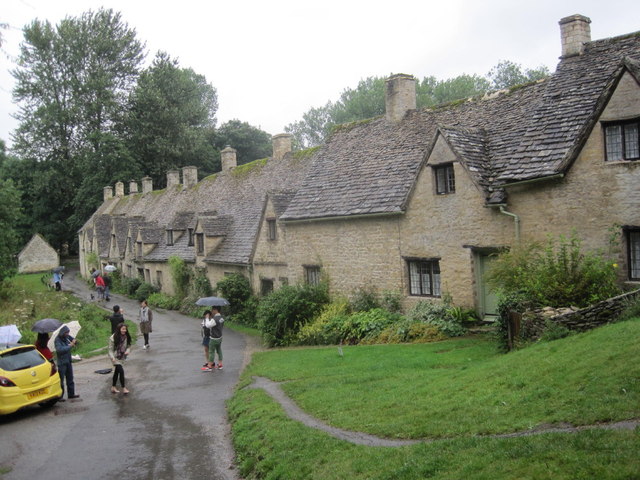
The Cotswolds are the picture-postcard England that people travel across the world to see: golden stone cottages, wool churches, clear little rivers and villages that look as though nothing has changed for four hundred years.
The best way to see them is on foot. Drive between Cotswold villages and you'll spend half the day looking for a parking space. Walk between them and you get the quiet lanes, the river meadows and the views across the wolds, with a pub waiting at the end.
The Cotswolds are a National Landscape (formerly an Area of Outstanding Natural Beauty), and the Cotswold Way National Trail runs along their western edge for 102 miles from Chipping Campden to Bath. Here are five village walks that show the area at its best.
1. Bourton-on-the-Water and the Slaughters
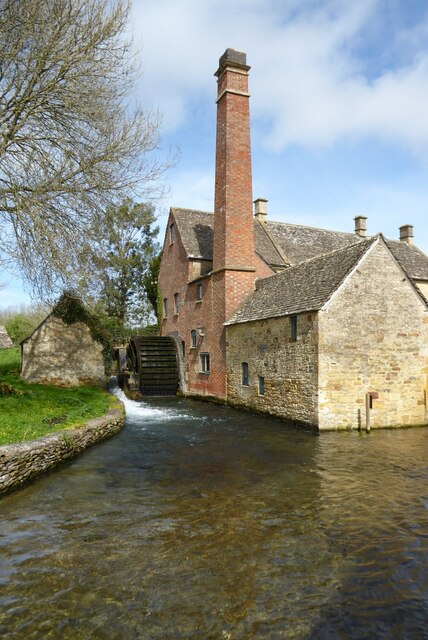 Photo: © Philip Halling (CC BY-SA 2.0), via Geograph
Bourton-on-the-Water, with the River Windrush running through its centre under low stone bridges, is one of the busiest villages in the Cotswolds. Walk out of it, though, and within half an hour you're in Lower Slaughter, where the little River Eye flows past stone cottages and a working watermill. Follow the river path upstream to Upper Slaughter, even quieter, where you can cross the stream by the ford or the footbridge.
Return to Bourton the same way, or by field paths, for a walk of a few miles. For a full day, the waymarked Bourton Circular continues on to the village of Naunton and back, about 10 miles in all.
There are some stiles and field gates on the paths between the villages, and you'll need to cross the busy Fosse Way (A429) with care.
2. Bibury and Coln St Aldwyns
Bibury is home to Arlington Row, a terrace of 14th-century stone cottages, originally a wool store and later converted into weavers' cottages. It's one of the most photographed streets in England, so arrive early or late if you want it to yourself.
A stile-free circular walk links Bibury with the neighbouring village of Coln St Aldwyns, following the River Coln through meadows and along walled lanes. Along the way you cross the line of Akeman Street, a Roman road, and pass Bibury's Saxon church and trout farm.
3. Stanton and Snowshill
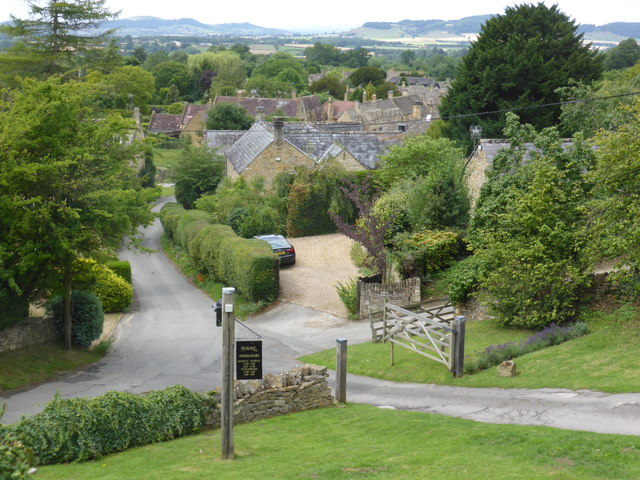 Photo: © Chris Allen (CC BY-SA 2.0), via Geograph
Stanton is often called the most beautiful village in the Cotswolds, a single street of golden cottages with almost nothing out of place. From here, a stile-free circular route climbs onto the Cotswold Way, then heads through National Trust woodland to Snowshill, a tiny hilltop village best known for Snowshill Manor and its eccentric collection.
The route returns along the escarpment, with views across the Vale of Evesham and the Severn Vale towards Wales, before a steep descent back to Stanton. There are some steep climbs, so it suits walkers with reasonable fitness.
Parking: Use the village car park by the cricket ground rather than the village centre. The pub car park is for customers only.
4. Chipping Campden and Dover's Hill
Chipping Campden is one of the finest old wool towns in England, with a long, curving high street of honey-stone buildings and the 17th-century Market Hall at its heart. A carved stone beside the Market Hall marks the start of the Cotswold Way.
Follow the trail out of town up to Dover's Hill, owned by the National Trust, where a topograph points out the landmarks across the Vale of Evesham. Dover's Hill has hosted the "Cotswold Olimpicks" since 1612. A longer loop drops through Lynches Wood, famous for its bluebells in May, before climbing back up. The route is stile-free, though it has some steep and muddy sections.
5. Broadway and Broadway Tower
Broadway is a wide, elegant village at the foot of the Cotswold escarpment. The Cotswold Way climbs steeply out of it through fields to Broadway Tower, a Georgian folly standing on top of Beacon Hill. On a clear day, the views stretch across several counties.
The climb is steep but short, and you can return to Broadway the same way or make a loop through the fields.
Tips for walking in the Cotswolds
Plan your own Cotswolds village walk
Tell Your next walk how long you want to walk, your ability and the villages or landmarks you'd like to see, then tick "Pub lunch" and "No stiles" if you need them. It'll plan four personalised Cotswolds walks on public paths, with step-by-step directions and OS mapping.