Planning guides
Station-to-station walks: the best car-free days out in Britain
15 October 2026 · 6 min read · Your Next Walk
There's something quietly brilliant about a walk that starts at one railway station and finishes at another. You never have to walk back the way you came. Nobody has to stay sober to drive. And the walk always ends somewhere with a train home, which usually means somewhere with a pub.
A linear walk also opens up routes that a circular one can't: a whole stretch of coastline, a river from one town to the next, a ridge from end to end. Here are seven of the best in Britain, from an easy riverside stroll to a full day on the cliffs.
Tap a pin to jump to that walk.
How station-to-station walks work
1. Lelant to St Ives, Cornwall
This is one of the prettiest short coastal walks in Britain, and the branch line it follows is a treat in itself, hugging the edge of St Ives Bay. From Lelant station, the South West Coast Path runs high above the bay past the Hayle Estuary, an RSPB reserve, the dunes of Porthkidney Sands and the golden beach at Carbis Bay, before dropping into St Ives.
The ups and downs are modest, but the path is exposed to sea winds, so take a layer. Part of the route crosses a golf course, so stay on the marked path. There's a station at Carbis Bay too, so you can cut it short.
2. Goring to Pangbourne, Oxfordshire and Berkshire
The Thames Path between Goring and Pangbourne follows the river through the Goring Gap, where the Chilterns and the Berkshire Downs close in around the Thames. You pass under one of Brunel's brick railway bridges, past the Hartslock Nature Reserve (famous for its orchids and red kites), through the village of Whitchurch-on-Thames and across its toll bridge into Pangbourne.
It's flat, gentle and easy to follow, which makes it a good first station-to-station walk.
3. Seaford to Eastbourne: the Seven Sisters, East Sussex
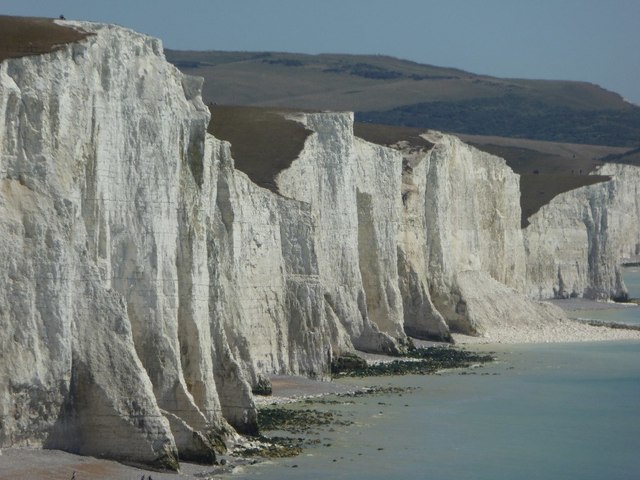 Photo: © Philip Halling (CC BY-SA 2.0), via Geograph
This is the big one. From Seaford, the route crosses Cuckmere Haven, with its famous meandering river, then climbs and drops over each of the chalk cliffs of the Seven Sisters. Beyond Birling Gap it passes the old Belle Tout lighthouse and climbs to Beachy Head, the highest chalk sea cliff in Britain, before descending into Eastbourne.
Be honest about how hard it is: it's a long day with a lot of steep ups and downs, and very little of it is flat.
Shorter option: Stop at Exceat or Birling Gap and catch a bus instead.
4. Edale to Hope over the Great Ridge, Peak District
Start at Edale, at the foot of Kinder Scout, and climb to Hollins Cross on the Great Ridge, the spine of high ground between the Edale and Hope valleys. Follow the ridge east over Back Tor and up to Lose Hill, with huge views in both directions, then drop down to the village of Hope.
It's a proper hill walk, with steep climbs and exposed ground on the ridge, so wear boots and take a waterproof.
5. Horton-in-Ribblesdale to Ribblehead, Yorkshire Dales
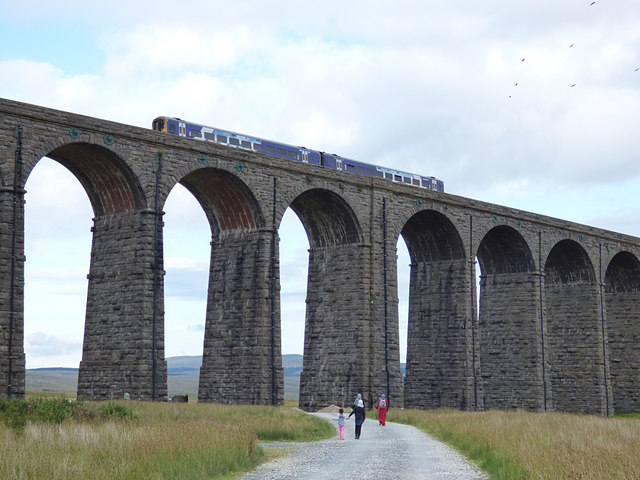
The Settle–Carlisle line is a great walk in itself before you've even got off the train. From Horton-in-Ribblesdale, follow the Pennine Way north past Sell Gill Holes, a pair of potholes, then across open limestone country. A short detour takes you to Ling Gill, a deep wooded ravine that's now a nature reserve.
The route finishes at Ribblehead, beneath the vast 24-arched Ribblehead Viaduct. It's a long walk, but without serious hills, which makes it a good option when the cloud is down on the Three Peaks.
6. Fairbourne to Barmouth, Gwynedd
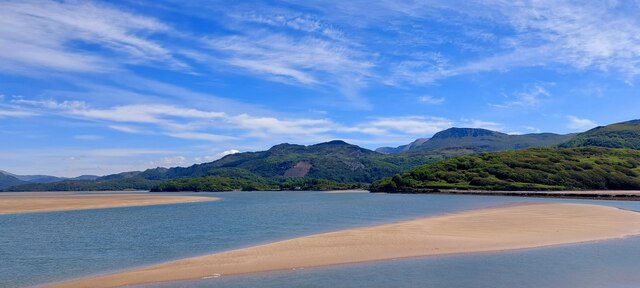 Photo: © I Love Colour (CC BY-SA 2.0), via Geograph
This short, flat walk ends with something special: crossing the Mawddach Estuary on foot over Barmouth Bridge, a long Victorian timber viaduct that carries both the railway and a footpath. The views up the estuary towards Cadair Idris are among the best in Wales.
From Fairbourne, follow the path along the estuary to Morfa Mawddach, then cross the bridge into Barmouth. There's a small toll for walkers on the bridge, so carry some change or a card.
7. Kingussie to Newtonmore, Cairngorms
These two neighbouring villages in the Cairngorms National Park are both on the main line between Perth and Inverness. A route between them climbs through woodland and moorland to Loch Gynack before descending to Newtonmore, with views across Strathspey to the Cairngorm mountains.
Trains on this line are less frequent than in the south, so plan around the timetable. Newtonmore is home to the open-air Highland Folk Museum, which is open seasonally if you fancy finishing with some history.
Plan your own station-to-station walk
Your Next Walk can plan car-free walks you can reach by train. Tell it where you want to start, how long you want to walk and your ability, add a pub or café stop, and it'll plan personalised routes on public paths with step-by-step directions and OS mapping.
Frequently asked questions
What is a station-to-station walk?
A linear walk that starts at one railway station and finishes at another, so you can catch the train back rather than retracing your steps or returning to a car.
What are the best station-to-station walks in Britain?
Classics include Seaford to Eastbourne over the Seven Sisters, Lelant to St Ives in Cornwall, Edale to Hope in the Peak District, and Horton-in-Ribblesdale to Ribblehead on the Settle–Carlisle line.
What's the best station-to-station walk for beginners?
Goring to Pangbourne along the Thames is flat, well signposted and only a few miles long. Fairbourne to Barmouth in Wales is another easy option.
Do I need to book trains for a station-to-station walk?
Usually not, but check the timetable in advance, particularly the last train home on rural lines and on Sundays.